
GraphQL Blueprint
Open source.
Case study · Open Source · OSLabs · 2021
GraphQL is a query and data-manipulation language that lets developers build apps faster than ever — but its setup is still unwieldy. Adding it to a project with a lot of data takes time. We wanted to create an app that generates the repetitive, tedious side of GraphQL effortlessly, while still giving developers the full power of the language. We built it by iterating on GraphQL Designer, whose team open-sourced their code in 2018 — Blueprint wouldn’t exist without them.
A graphical schema designer that exports production-level database, server, and client-side code for inclusion in React + Express projects. Developers model multi-database schemas visually and export the files needed to run a GraphQL server and client locally — the boilerplate stops being a tax on starting.
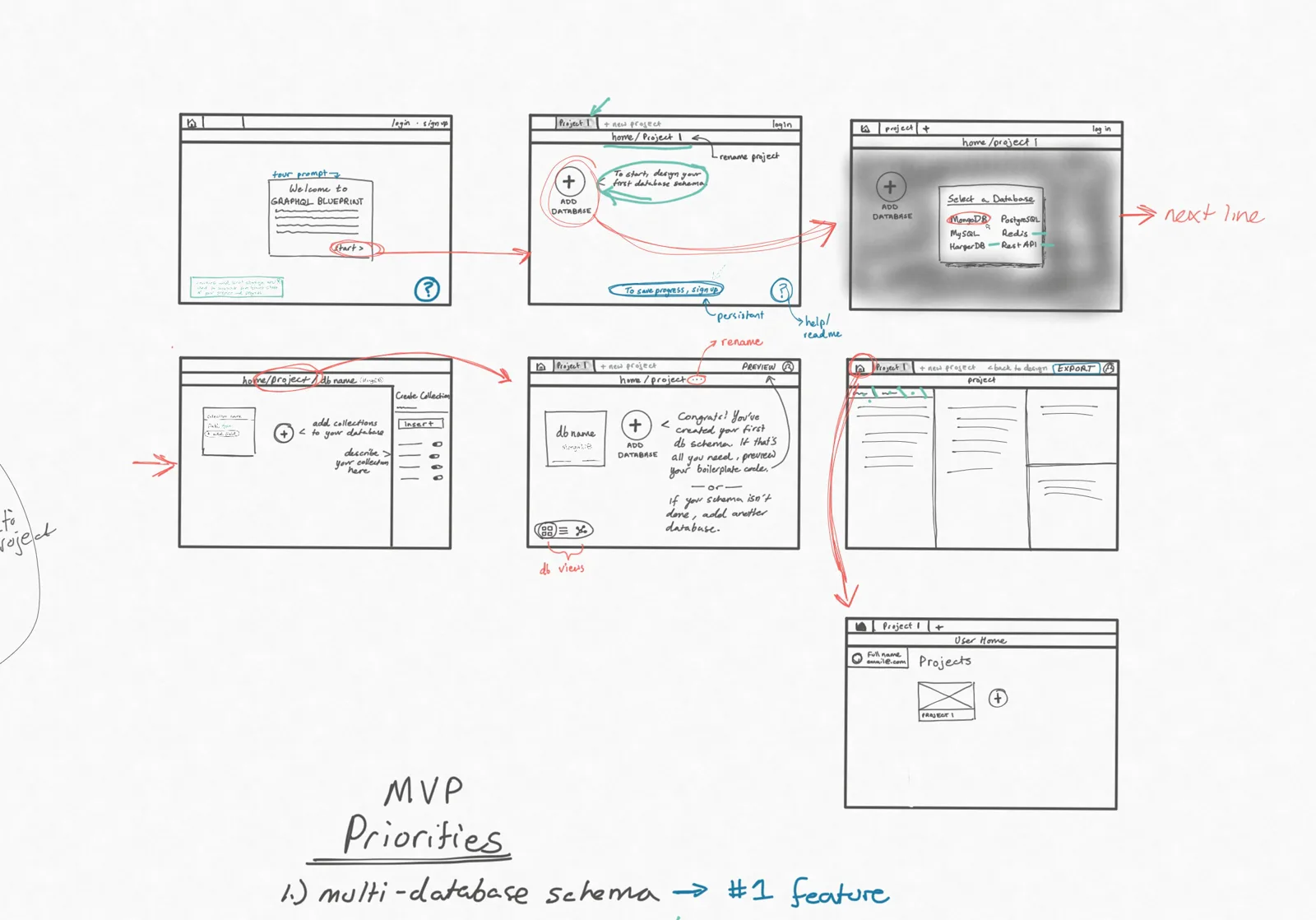
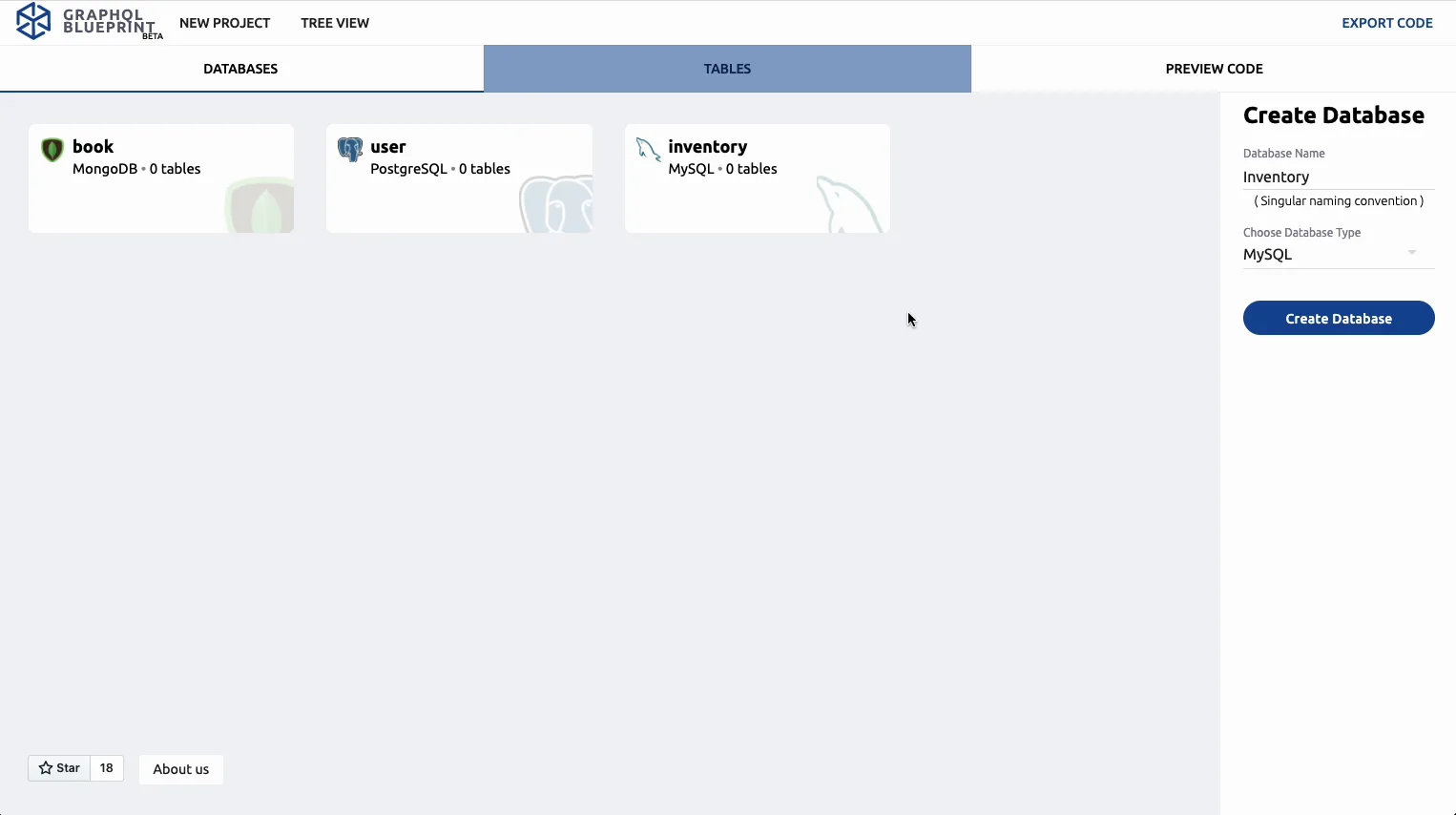
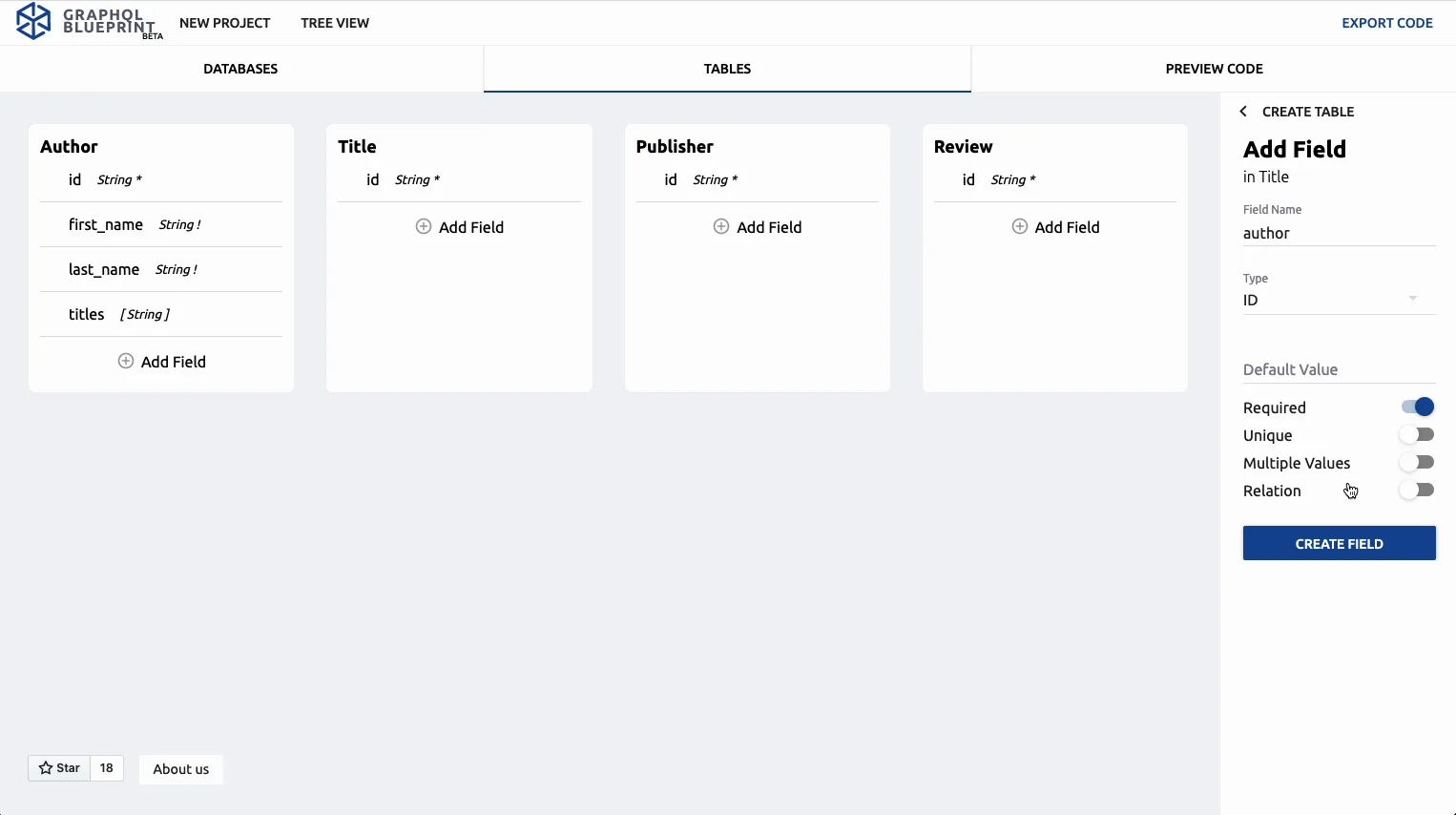
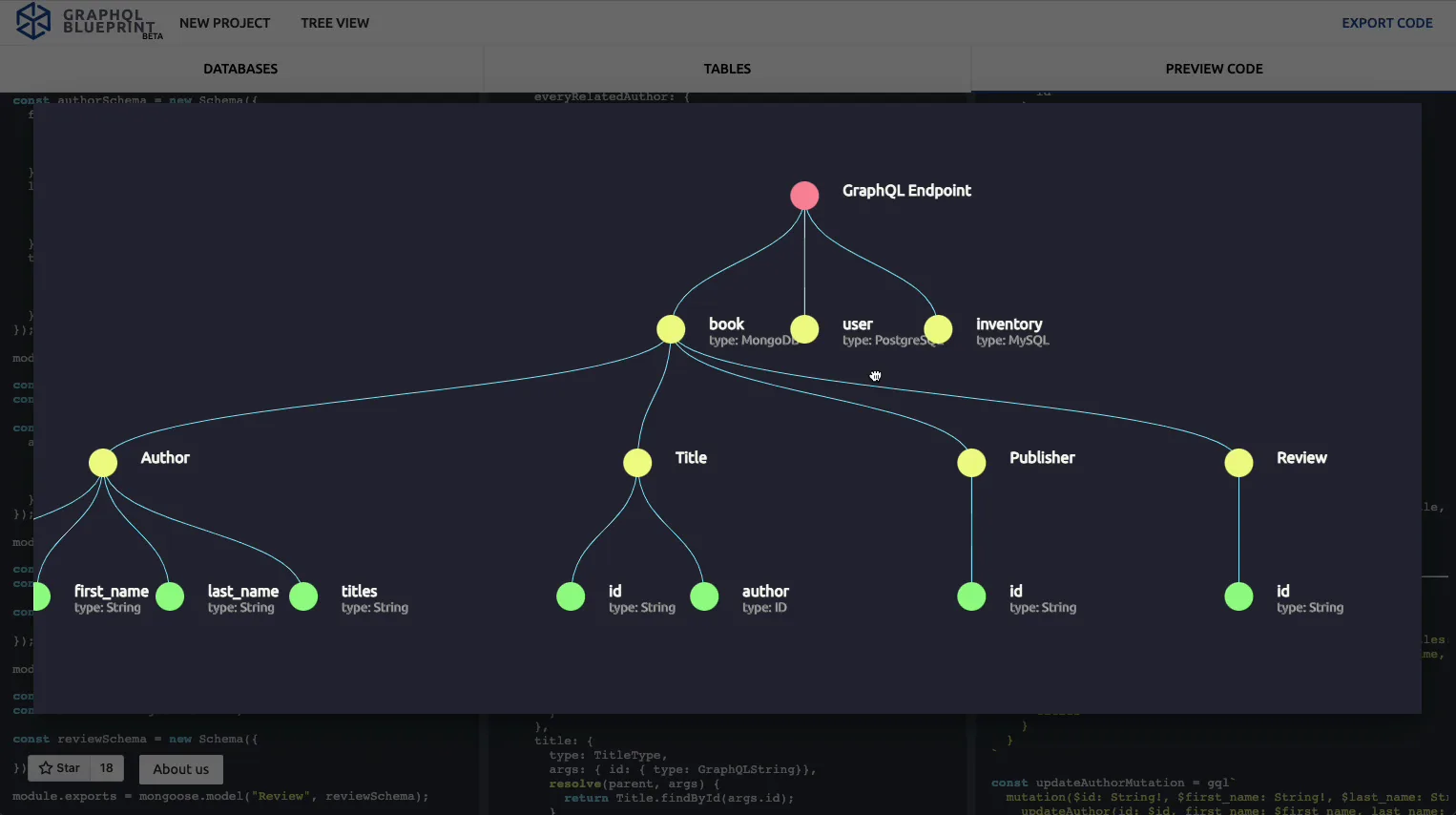
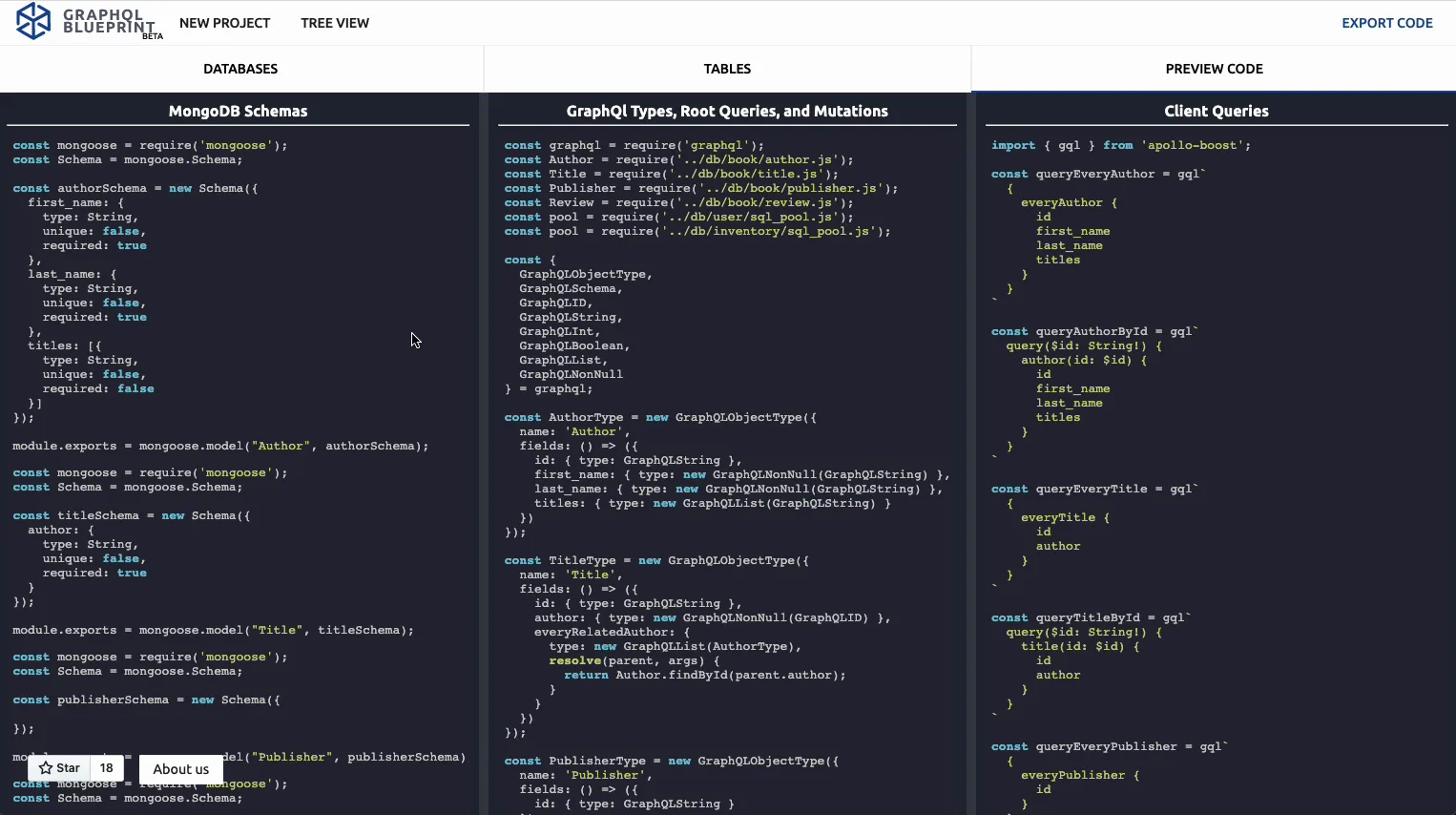
Tabbed windows let developers move quickly between views without losing context. Micro-interactions on every component enabled full CRUD on schemas, fields, and relationships. A tree view powered by D3.js gave users a bird’s-eye view of their schema — critical for catching modeling mistakes early.
Parsing algorithms dynamically generate deeply nested typed code structures without blocking the main thread. Unit test coverage with Jest. CI/CD to AWS EC2 via CircleCI. The whole thing is built so that the moment a developer hits “export,” they get artifacts ready to run.
GraphQL Blueprint has been used by several hundred engineers, approximately half of whom exported generated boilerplate directly into their projects. Built as an OSLabs open-source release, it remains a reference point for developer tooling work — and a reminder that the most valuable thing engineering can do for engineers is delete tedious work.
View on GitHub